

By using this site, you agree to the Privacy Policy and Terms of Use.
Accept
SavanniqueSavanniqueSavannique
Notification Show More
Font ResizerAa
  • Home
  • Politics
  • News
  • Business
  • Lifestyle
  • Fashion
    Fashion
    Show More
    Top News
    Alake @70: Tomori Hails Minister’s Reforms in Solid Minerals Sector
    2 weeks ago
    Latest News
    Alake @70: Tomori Hails Minister’s Reforms in Solid Minerals Sector
    2 weeks ago
  • Celebrity
    CelebrityShow More
    Alake @70: Tomori Hails Minister’s Reforms in Solid Minerals Sector
    2 weeks ago
    Veteran Nollywood actor, Olu Jacobs, has died at the age of 84.
    1 month ago
  • Culture
    CultureShow More
    NOA urges Nigerians to reject hate speech, violence ahead of 2027
    3 weeks ago
  • Contact
Reading: Abuja Tremor: NGSA Identifies Reactivated Fault Lines, Calls for Stronger Monitoring
Share
SavanniqueSavannique
Font ResizerAa
  • Fashion
  • Celebrity
  • Culture
  • Beauty
  • Model
  • Lifestyle
Search
  • Home
    • Home 1
  • Categories
    • Fashion
    • Celebrity
    • Culture
    • Beauty
    • Photography
    • Lifestyle
  • Bookmarks
  • More Foxiz
    • Sitemap
Have an existing account? Sign In
Follow US
  • Advertise
© 2022 Foxiz News Network. Ruby Design Company. All Rights Reserved.
Savannique > Blog > Environment & Climate > Abuja Tremor: NGSA Identifies Reactivated Fault Lines, Calls for Stronger Monitoring
Environment & ClimateNatural ResourcesNews

Abuja Tremor: NGSA Identifies Reactivated Fault Lines, Calls for Stronger Monitoring

Savannique
Last updated: August 14, 2026 2:27 am
By Savannique
2 months ago
Share
3 Min Read
SHARE

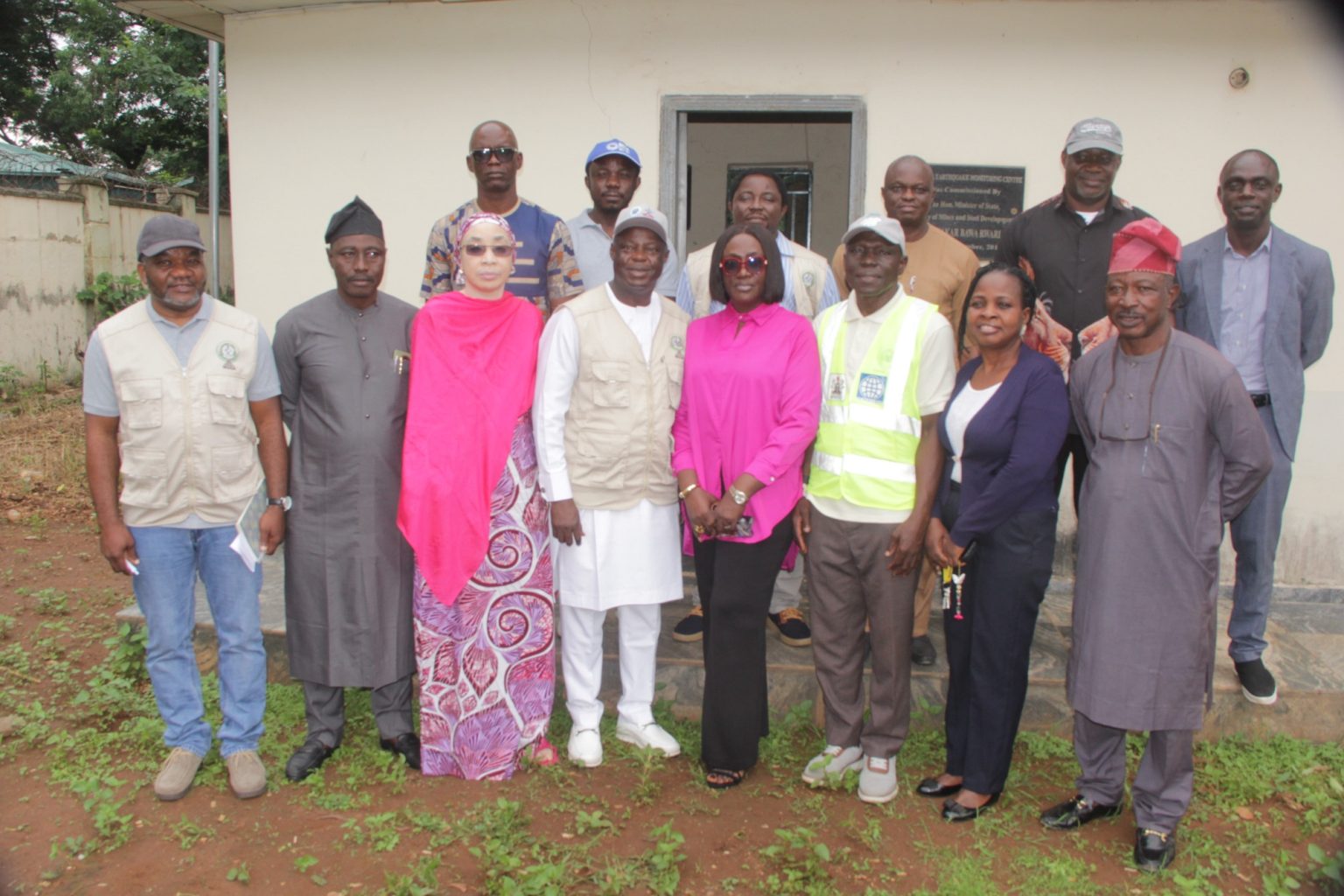
The Nigerian Geological Survey Agency (NGSA) has attributed the August 4 earth tremor in Abuja to the possible reactivation of fault lines running through Nigeria, calling for stronger seismic monitoring and mandatory geological assessments for major infrastructure projects across the country.

Director-General of NGSA, Prof. Olusegun O. Ige, disclosed this yesterday in Abuja at a technical press briefing on the tremor, saying the agency had identified an intra-plate response to accumulated stresses in the earth’s crust as a possible trigger of the incident.

Ige said the stresses could have been aided by the reactivation of the northeast-southwest and northwest-southeast fault systems, whose movements could trigger tremors and dissipate through secondary fractures.

He, however, assured that the Abuja tremor was a low-magnitude micro-event that posed no threat to lives and property.

According to him, the tremor lasted only five seconds and originated from a depth of less than one kilometre, with the event recorded by the agency’s seismic monitoring station in Utako at 11:23:27 a.m.

He said the vibration was felt at the Defence Intelligence Agency facility at Mambila Barracks, Asokoro, parts of the NNPC Towers and some buildings in the Central Business District.

Ige said NGSA monitored its seismic stations for more than five days after the incident, with the records showing that the tremor had completely subsided.

He added that a follow-up assessment of the affected locations found no evidence of structural damage, injuries or serious discomfort.

The DG said the low magnitude and isolated nature of the event meant it lacked sufficient energy to damage building foundations, cause cracks in walls or trigger secondary hazards.

Against the backdrop of repeated tremor occurrences in parts of Nigeria, the agency called on the government to expand its seismic monitoring network and provide adequate funding and logistics for effective monitoring.

It also recommended that major mining and quarry operators install seismic monitoring meters at their sites to complement government monitoring stations.

The NGSA further urged relevant authorities to make geological and structural configuration assessments mandatory before the construction of major infrastructure, including dams, bridges, rail lines, airports, mines and quarries.

It called for stronger enforcement of seismic building standards for heavy infrastructure and industrial projects, as well as regular public education on earthquake safety.

You Might Also Like

DWI Rejects Ardo’s 10% Forecast, Says North Will Back Tinubu in 2027
Nigeria, US sign framework to unlock American investment in $700bn mineral sector
NOA urges Nigerians to reject hate speech, violence ahead of 2027
Insecurity, Regulatory Conflicts Threaten Nigeria’s Mining Investment Drive
Alake Seeks Continental Fund to Tackle Mine Disasters
Share This Article
Facebook Email Print
Share
Previous Article NIHSA Places 17 States on Flood Alert, Orders Immediate Evacuation from High-Risk Communities
Next Article Youth Policy Challenge Crowns 2026 Winners at University of Ibadan
Leave a Comment

Leave a Reply Cancel reply

Your email address will not be published. Required fields are marked *

SavanniqueSavannique
Follow US
© 2026 Savannique News Network. Design by Ikigai. All Rights Reserved.

Powered by CookieAdmin
Necessary cookies enable essential site features like secure log-ins and consent preference adjustments. They do not store personal data.
None
Functional cookies support features like content sharing on social media, collecting feedback, and enabling third-party tools.
None
Analytical cookies track visitor interactions, providing insights on metrics like visitor count, bounce rate, and traffic sources.
None
Advertisement cookies deliver personalized ads based on your previous visits and analyze the effectiveness of ad campaigns.
None
Unclassified cookies are cookies that we are in the process of classifying, together with the providers of individual cookies.
None
Powered by CookieAdmin
Join Us!
Subscribe to our newsletter and never miss our latest news, podcasts etc..
[mc4wp_form]
Zero spam, Unsubscribe at any time.
Welcome Back!

Sign in to your account

Username or Email Address
Password

Lost your password?