

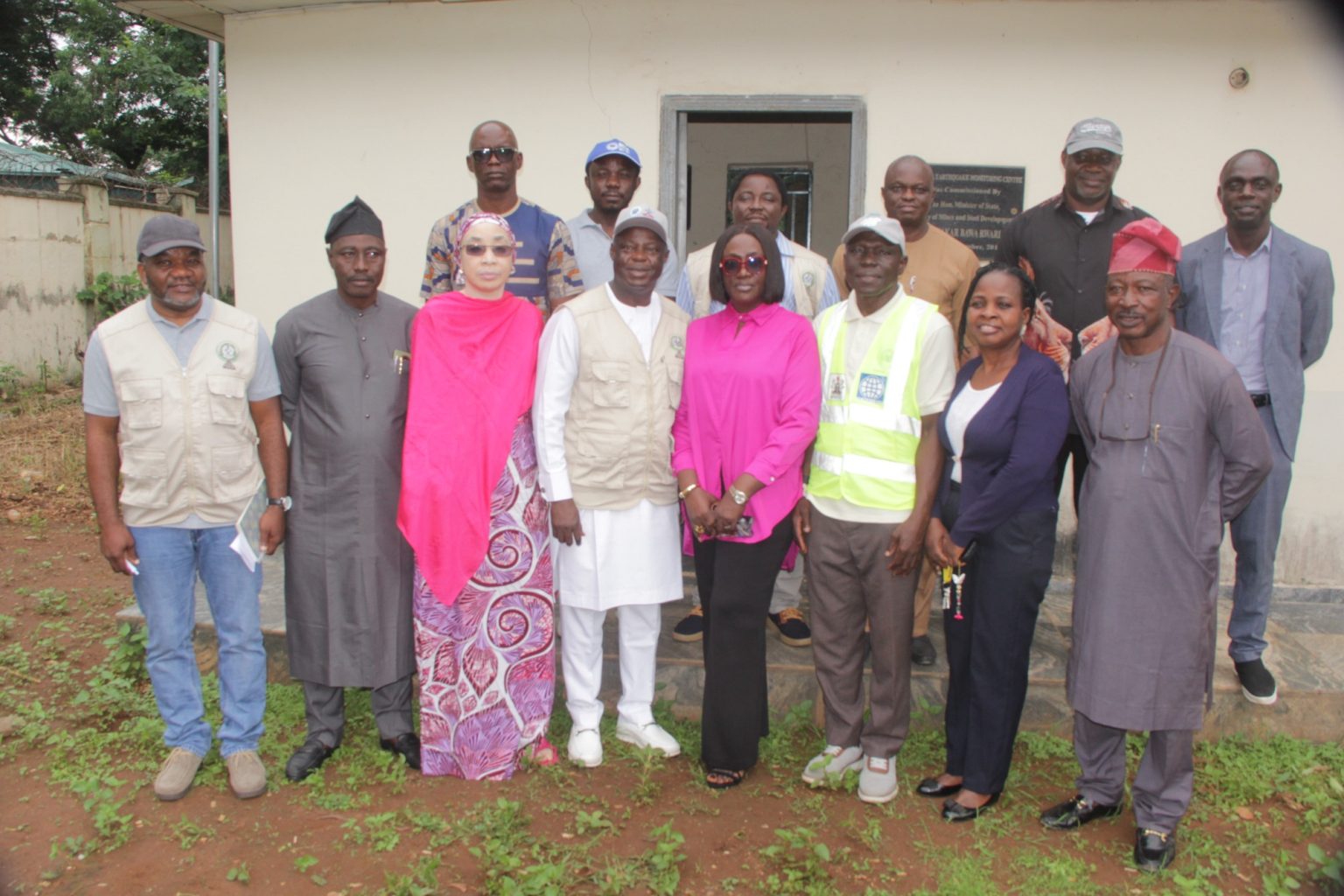
The Nigerian Geological Survey Agency (NGSA) has attributed the August 4 earth tremor in Abuja to the possible reactivation of fault lines running through Nigeria, calling for stronger seismic monitoring and mandatory geological assessments for major infrastructure projects across the country.
Director-General of NGSA, Prof. Olusegun O. Ige, disclosed this yesterday in Abuja at a technical press briefing on the tremor, saying the agency had identified an intra-plate response to accumulated stresses in the earth’s crust as a possible trigger of the incident.
Ige said the stresses could have been aided by the reactivation of the northeast-southwest and northwest-southeast fault systems, whose movements could trigger tremors and dissipate through secondary fractures.
He, however, assured that the Abuja tremor was a low-magnitude micro-event that posed no threat to lives and property.
According to him, the tremor lasted only five seconds and originated from a depth of less than one kilometre, with the event recorded by the agency’s seismic monitoring station in Utako at 11:23:27 a.m.
He said the vibration was felt at the Defence Intelligence Agency facility at Mambila Barracks, Asokoro, parts of the NNPC Towers and some buildings in the Central Business District.
Ige said NGSA monitored its seismic stations for more than five days after the incident, with the records showing that the tremor had completely subsided.
He added that a follow-up assessment of the affected locations found no evidence of structural damage, injuries or serious discomfort.
The DG said the low magnitude and isolated nature of the event meant it lacked sufficient energy to damage building foundations, cause cracks in walls or trigger secondary hazards.
Against the backdrop of repeated tremor occurrences in parts of Nigeria, the agency called on the government to expand its seismic monitoring network and provide adequate funding and logistics for effective monitoring.
It also recommended that major mining and quarry operators install seismic monitoring meters at their sites to complement government monitoring stations.
The NGSA further urged relevant authorities to make geological and structural configuration assessments mandatory before the construction of major infrastructure, including dams, bridges, rail lines, airports, mines and quarries.
It called for stronger enforcement of seismic building standards for heavy infrastructure and industrial projects, as well as regular public education on earthquake safety.